
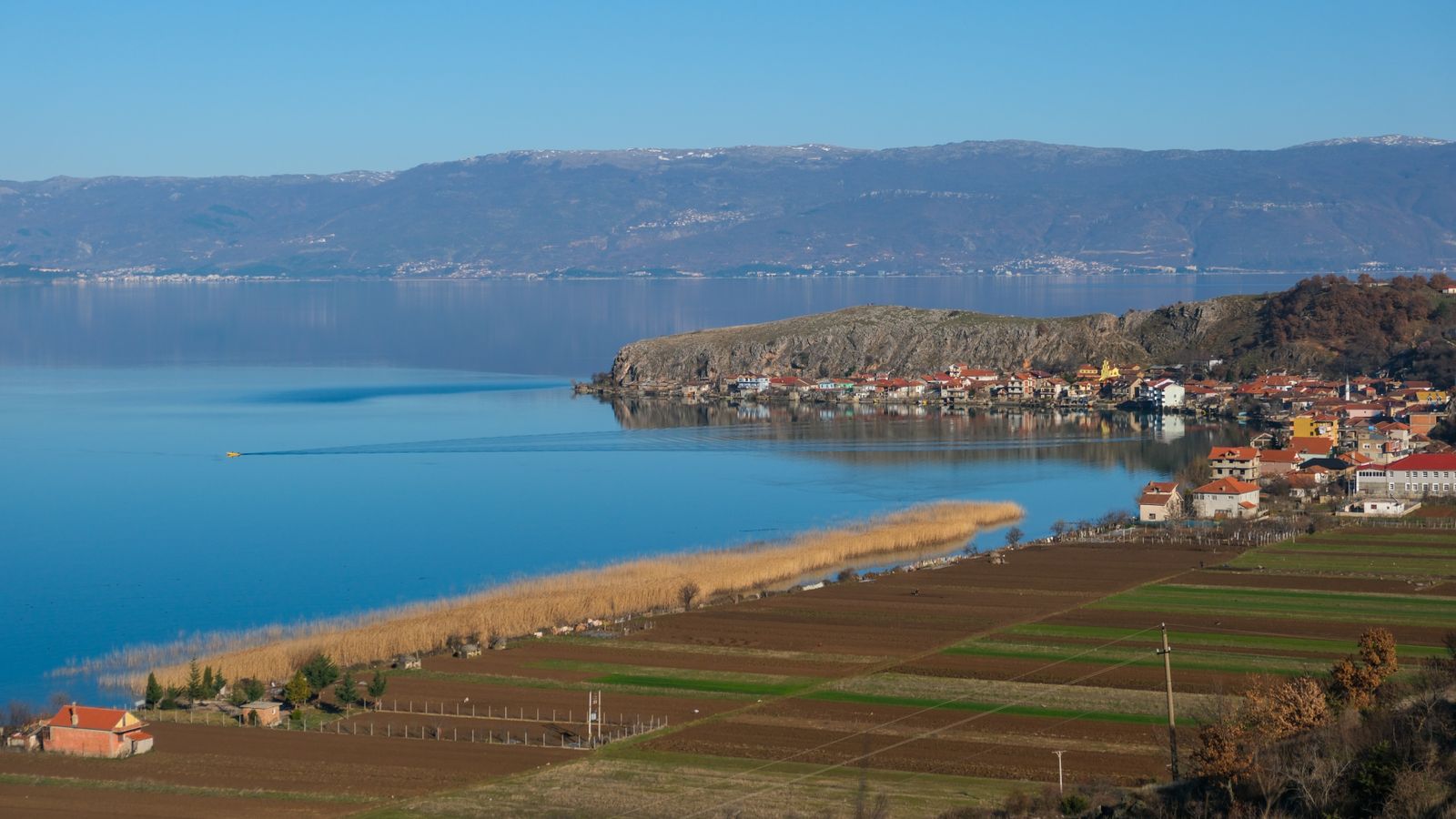
Most people meet Lake Ohrid from the North Macedonian side, in the old town of Ohrid. We think the better way in is from Albania. The Albanian shore is quieter, the fish is just as good, and from Pogradec you can be at the monastery of St Naum, just over the border, in well under an hour. This guide starts on the Albanian side, where we live, then covers the other shore, the crossings and a sample three-day plan.
One lake, two countries
Lake Ohrid sits on the border between Albania and North Macedonia, roughly a third of it Albanian. It is one of the oldest lakes in Europe and so clear that on a still morning you can watch the bottom fall away beneath a rowing boat. UNESCO first listed the North Macedonian side in 1979 and 1980, and in 2019 extended the listing to the Albanian side: more than 11,000 hectares around Pogradec, including the Lin peninsula, the shore up to the border and the Drilon springs. Today it is one shared World Heritage site.
The lake is also under pressure. In 2026 UNESCO's World Heritage Committee chose not to put it on the List of World Heritage in Danger, but it warned of serious damage from illegal building and wastewater and asked both countries to report back. The useful response as a visitor: stay in licensed places and leave nothing on the shore.
The Albanian shore: Pogradec, Lin, Drilon and Tushemisht
The Albanian shore is short, about 25 km between the two border crossings, with Pogradec in the middle. You can see it properly in a day and a half without rushing, and it makes a gentle first stop out of Tirana, about two and a half hours away by road via Elbasan and the Shkumbin valley.
Pogradec is a lake town rather than a resort. The best of it is the long lakefront promenade in the evening, when families walk, the cafés fill and the light turns pink over the mountains on the Macedonian side.
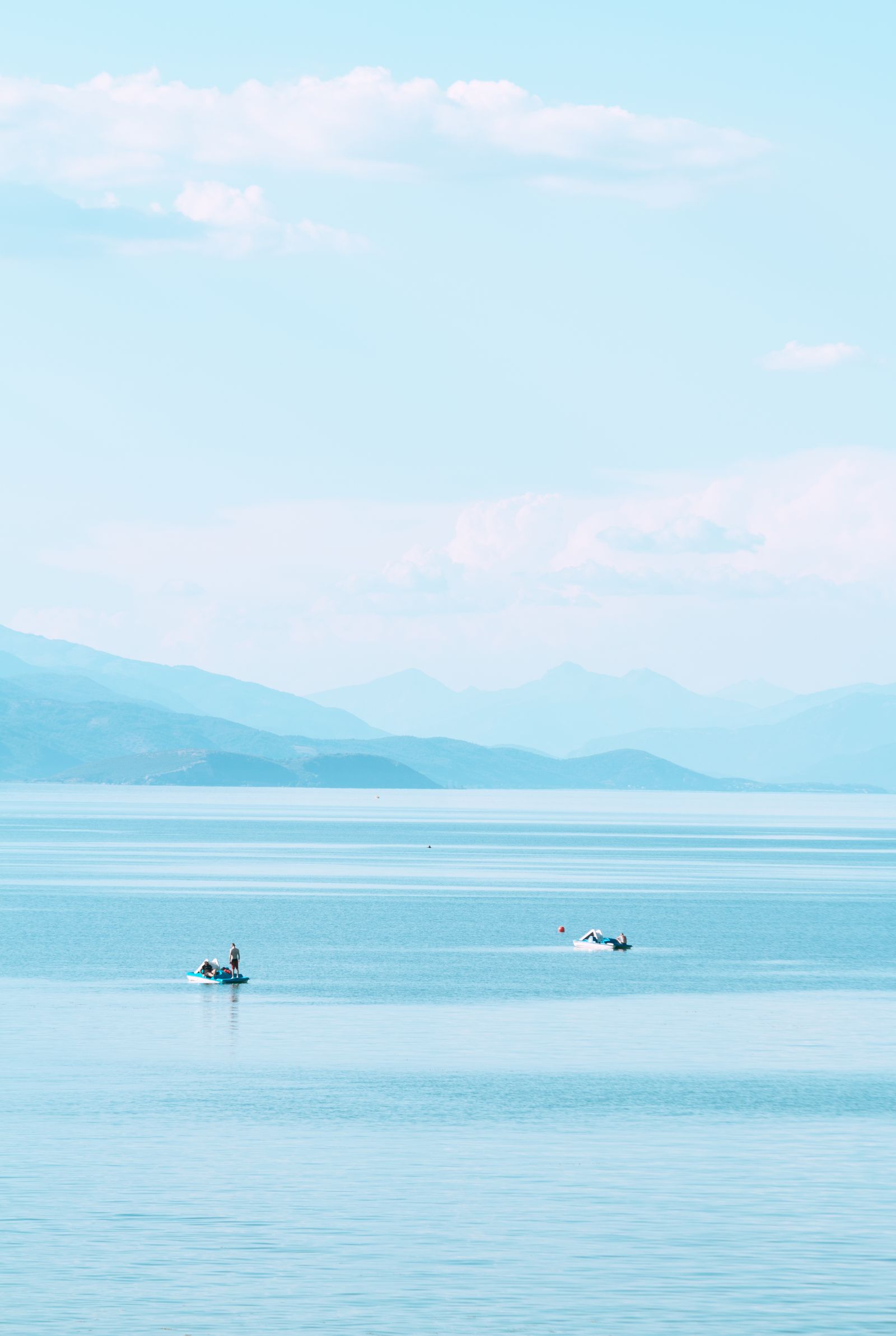
About 20 km north of Pogradec, on a small rocky peninsula, is the fishing village of Lin. Walk up through its lanes to the top of the hill and you reach a fenced enclosure with the foundations of a sixth-century early Christian church and its mosaic floor of geometric bands, vines, birds and fish. Access is informal: the gate is usually locked, a caretaker's number is posted on it, and visitors report being let in within a few minutes. There are no published hours or prices, and the mosaics are often kept covered to protect them, so expect to see a panel or two rather than the whole floor. The real reason to come is the village itself, with boats on the shingle and a couple of simple places to eat fish.
Five kilometres east of Pogradec, towards the border, springs rise at Drilon and run through willow-lined channels into the lake. The water is believed to travel underground from Lake Prespa, on the other side of the mountain. Drilon is a landscaped park with swans, small boats and restaurants rather than wilderness, and it reopened with a new visitor centre in October 2024. Come in the morning, before the lunch crowds in summer. Next door, Tushemisht is a lakeside village of stone houses and fish restaurants with a pebble beach, and the road to the border runs just beyond it.
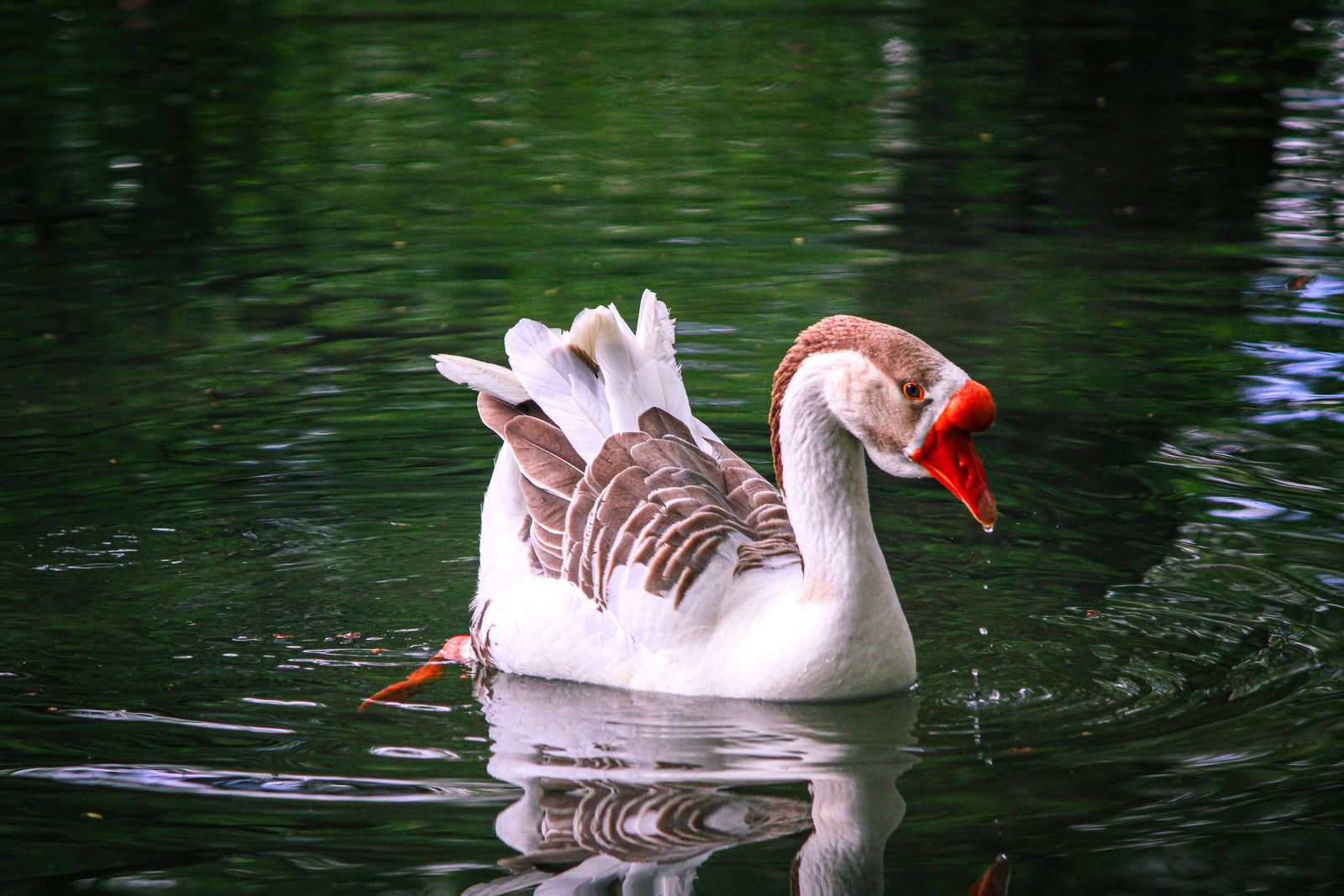
The fish to know is koran, the Ohrid trout, found in no other lake. It is protected, and in recent winters Albania has banned lake fishing during the spawning season, most recently from 1 December 2025 to 1 March 2026. Outside those months you may find wild koran on menus; during them it should not be fresh from the lake. Many restaurants serve farmed trout, which is fine, but ask which one you are getting and at what price. Pogradec cooks fish simply, grilled or baked in a clay dish, with salads from the surrounding farms and local wine.
Across the water: St Naum, Ohrid and Struga
The monastery of St Naum stands above the southern tip of the lake, a short way past the Tushemisht crossing and about 29 km from Ohrid town. The church has a long history on this spot, and its frescoes from the early 19th century are attributed to a painter from Korçë, one of many small threads tying the two shores together. Behind the monastery, springs fed from Prespa fill a clear pool where boatmen row visitors through the reeds.
Ohrid town deserves a full day on foot. Start at the Upper Gate and the ancient theatre, climb to Samuel's Fortress for the view, then walk down through Plaošnik, where the church of St Panteleimon was rebuilt on its old foundations between 1999 and 2002. From there a path leads to the 13th-century church of St John at Kaneo on its rock above the water, the view everyone photographs. Finish at St Sophia, an 11th-century church with remarkable frescoes, and a long dinner by the harbour.
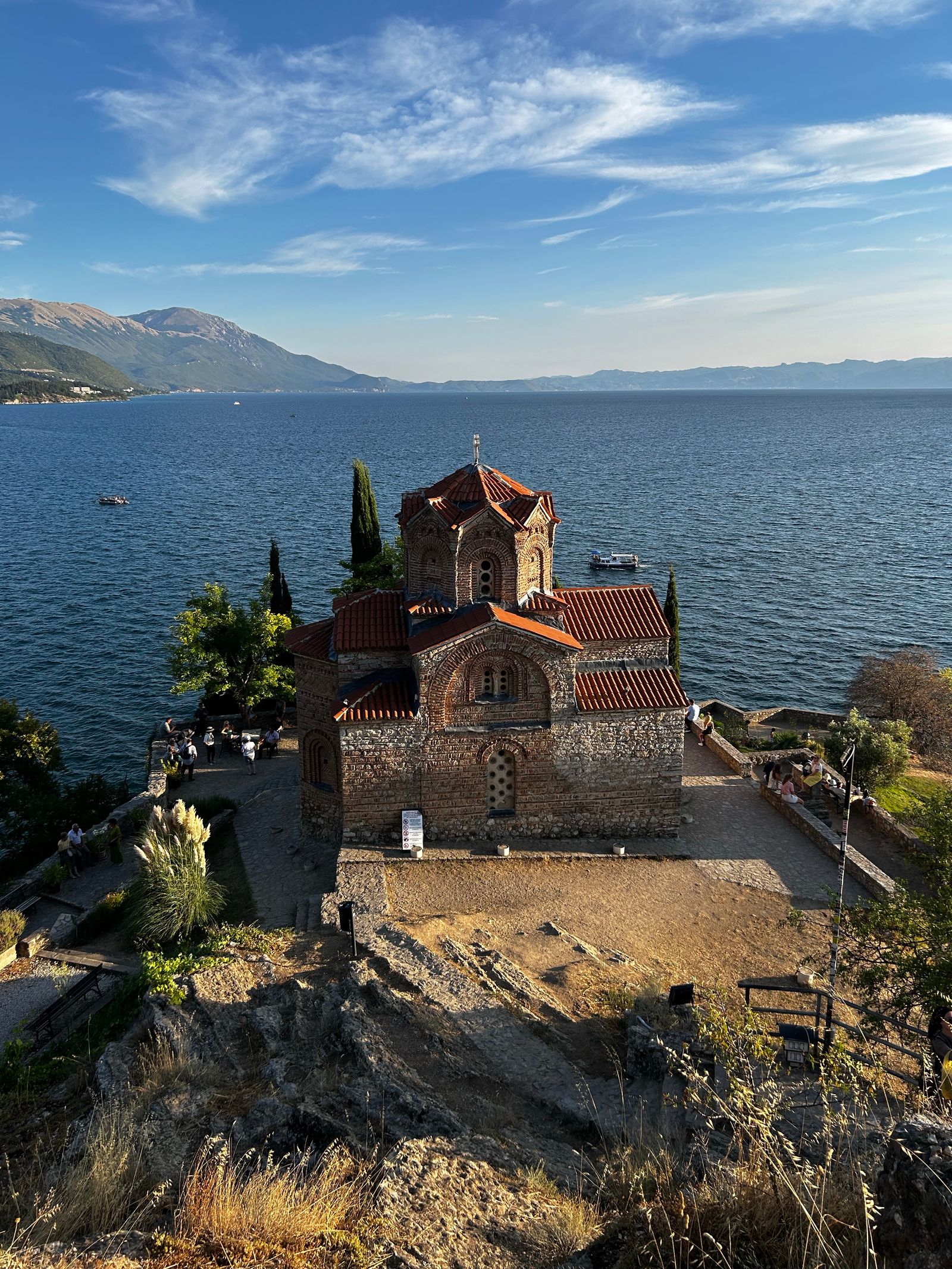
Plan around Mondays. The fortress, the Icon Gallery, the Robev house and the Bay of Bones museum are reported to close on Mondays, and in the winter season the fortress closes in mid-afternoon. Hours change, so check locally before you build a day around them. Boat trips run from Ohrid harbour to St Naum in the warmer months, roughly May to September, often stopping at the Bay of Bones, a reconstructed prehistoric pile village at Peštani. They depend on the season and the weather, so confirm a day ahead.
Struga sits at the northern end of the lake, where the Black Drin leaves it on its long way to the Albanian coast. It is calmer and more local than Ohrid, with Albanian spoken widely, and it is only about 12 km from the Qafë Thanë crossing. If you are driving a loop, it is a good last stop before heading back into Albania.
Further along the border
The lake is the heart of it, but the border country either side adds a lot if you have time. South of Pogradec, about an hour away, is Korçë, with the country's finest icon museum and good food; our guide to Korçë, Voskopojë and Dardhë covers it in detail. From Korçë a mountain road climbs to Albania's corner of the Prespa lakes, a national park shared with North Macedonia and Greece. The villages around Pustec (older maps may say Liqenas) are home to much of Albania's Macedonian community, and a short boat ride of around 20 minutes takes you to the island of Maligrad and its painted cave church of St Mary. Buses are scarce, so this is a stretch where a car or a driver makes all the difference.
From Prespa, the small Goricë and Stenje crossing leads towards Resen and Bitola, where the Museum of the Albanian Alphabet marks the 1908 Congress of Manastir; use it in daytime only. In the north, Peshkopi, with its thermal baths and the Korab mountains behind, is about 23 km from Debar on the Macedonian side through the Bllatë crossing. Further north again, Tetovo's Painted Mosque, covered inside and out in floral decoration, makes a long day out from Struga or Ohrid.
Crossing the border: what works now
There are five road crossings between Albania and North Macedonia. Two are on the lake, and those are the ones most visitors use. The details below were checked in October 2026; border arrangements change, so confirm before you travel.
| Crossing (Albania / North Macedonia) | Connects | What to know |
|---|---|---|
| Qafë Thanë / Kjafasan | Pogradec and Elbasan to Struga and Ohrid | Main crossing, open 24 hours and used by Tirana to Ohrid buses. Waits are often 15 to 30 minutes, longer on summer weekends. A single-check system was reported running from September 2026, but queues have not disappeared. |
| Tushemisht / Sveti Naum | Pogradec to St Naum and Ohrid, along the lake | Small lakeside crossing. Listed as 24 hours by Albanian customs, but often described as seasonal. Confirm locally outside summer. |
| Goricë / Stenje | Prespa (Pustec) to Resen and Bitola | Minor crossing. Albanian side listed as 07:00 to midnight. Daytime use only. |
| Bllatë / Blato | Peshkopi to Debar | Quiet crossing, listed as open 24 hours on both sides. |
| Trebisht / Džepište | Bulqizë area to Debar | Local crossing on minor roads; not one we would plan around. |
Neither country is in the Schengen area, so the EU's new Entry/Exit System does not apply here, and you will stop at both sides' booths at most crossings. EU and Schengen citizens can generally enter both countries with a valid national ID card or a passport. UK citizens need a passport: for North Macedonia it must be valid for at least 90 days after the day you arrive, and for Albania at least three months after the day you leave. Both allow visa-free tourist stays. Everyone else, including US, Canadian and Australian travellers, should check the rules for their own passport before booking.
In North Macedonia, visitors must be registered with the police within 48 hours of arrival. Hotels do this at check-in; if you stay in a private flat, check that your host does it. Read your government's travel advice for both countries before you go.
You can drive an Albanian rental car into North Macedonia, but only if the company allows it in writing and gives you a Green Card insurance certificate valid there. Arrange this when you book, not at the counter, because not every car is allowed to leave and fees vary by company. Keep the permission letter, the Green Card and the registration papers together in the car. If you are driving your own UK or EU car, check that North Macedonia (MK) and Albania (AL) are not crossed out on your Green Card. Our guide to renting a car in Albania covers the rest.
| Route | Roughly |
|---|---|
| Tirana to Pogradec | 2 to 2.5 hours |
| Pogradec to Ohrid via Tushemisht and St Naum | about 1 hour |
| Pogradec to Struga via Qafë Thanë | about 1 hour |
| Ohrid to Struga | 20 to 30 minutes |
| Pogradec to Korçë | about 1 hour |
| Korçë to Pustec (Prespa) | 45 minutes to 1 hour on a mountain road |
| Struga to Debar | about 1 hour |
When the Tushemisht crossing is not operating, the fallback from Pogradec is the longer drive round via Qafë Thanë and Struga. In winter, keep a spare day and drive the mountain stretches in daylight.
When to go
Late May, June and September are the sweet spot: warm enough to swim, long evenings and none of the August crush. July and August are hot and busy, especially in Ohrid, and border queues build at weekends. They also bring the Ohrid Summer Festival of music and theatre, which in 2026 ran from 12 July to 20 August; check the dates for your year. October is lovely and quiet, with autumn colour around Prespa, though boats and some lakeside restaurants start to wind down. Winter is cold and peaceful: Pogradec is very atmospheric, but the Lin mosaics stay covered, the Tushemisht crossing may not be operating, and wild koran is off the menu during the fishing ban. See the best time to visit Albania and visiting Albania in autumn for the bigger picture.
A sample three days on the lake
This is one simple way to do it, not a fixed programme. We shape the real route around your dates, your pace and the rest of your trip.
Sample: three days at Lake Ohrid from Tirana
Day 1: Tirana to Pogradec
Drive the Shkumbin valley past Elbasan to the lake, have lunch on fish at Lin, see the mosaics if the caretaker is around, then settle into Pogradec for the evening promenade.
Day 2: Drilon, St Naum and Ohrid
An early walk at Drilon, then cross at Tushemisht to St Naum and continue to Ohrid for the evening. Avoid planning the next day for a Monday.
Day 3: Ohrid, then home
Ohrid's old town on foot in the morning, a boat on the lake in season, then back to Tirana via Struga and Qafë Thanë.
Our published tours do not currently cross into North Macedonia, so an Ohrid extension is something we build as a private trip, on its own or added to a classic Albania route. Read how to plan a private custom tour of Albania for how that works, and how many days you need in Albania for fitting the lake into a longer trip.
Frequently asked questions
Both. The lake is shared, with roughly a third in Albania around Pogradec and the rest in North Macedonia around Ohrid and Struga. Since 2019 both sides form one UNESCO World Heritage site.
If you would like the lake in your trip, with a driver who knows the crossings, rooms on the right side of the water and a local guide for Ohrid's old town, tell us your dates and what you love and we will put together a private route.