
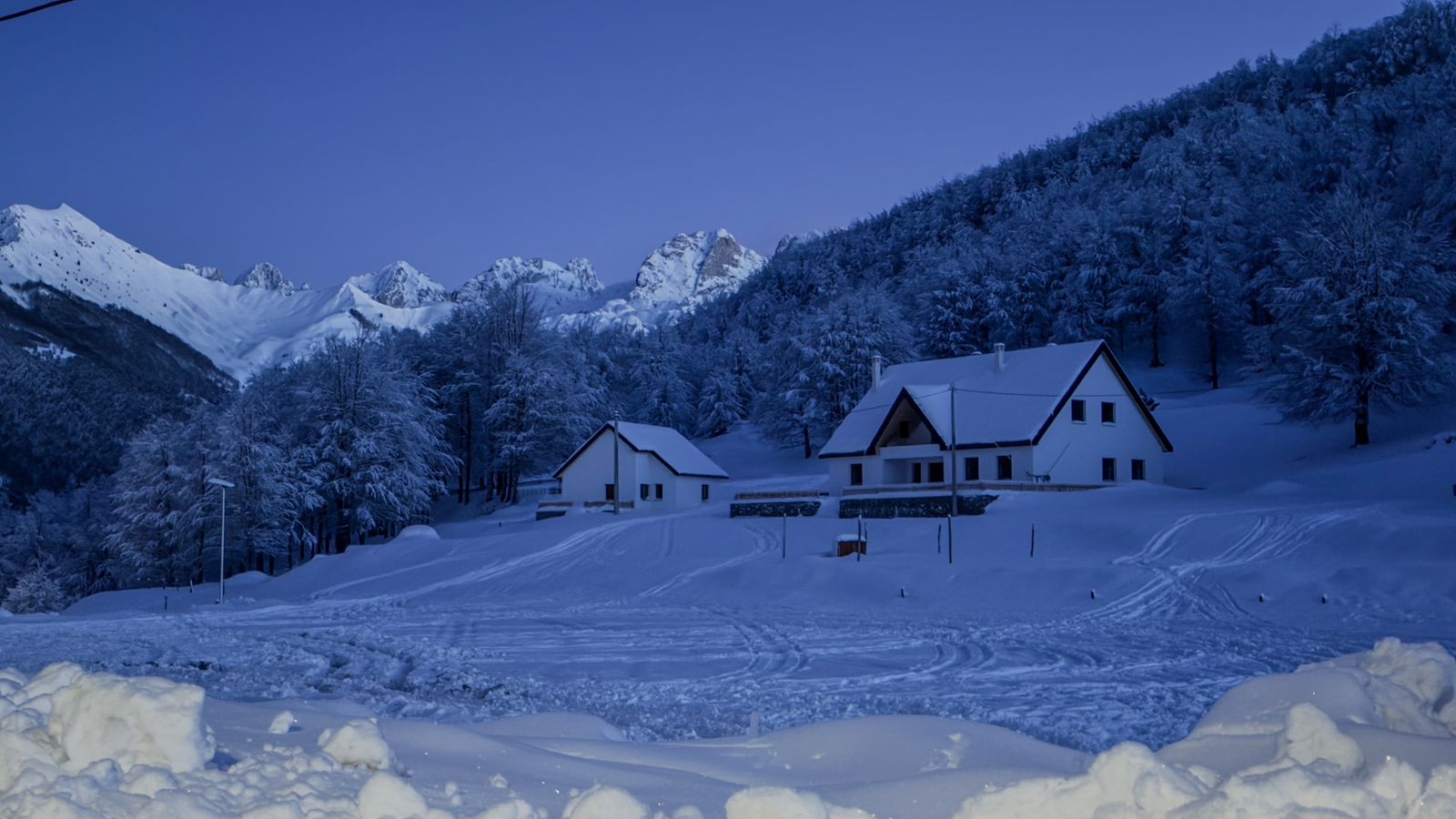
January and February are Albania's quietest months. The towns are lived-in rather than busy, the mountains are under snow, and you will often have a castle or an ancient site almost to yourself. The trade-off is rain in the lowlands, short days and closed mountain routes. This guide covers the weather month by month, where these weeks work best, dates to know and a one-week plan. For the whole season, see Albania in winter; for festive weeks, Albania in December.
Weather in January and February
Along the coast and in the lowlands, winter is mild but wet. Long-term averages from Climates to Travel give Tirana highs of about 12 °C in January and 14 °C in February, with rain on around ten days a month. Inland and higher up it is a different country: Korçë, at about 900 m, averages a January high of 5 °C and a low of -2 °C, and the northern mountains are deep in snow.
| Place | January high / low | February high / low | Rainy days, Jan / Feb |
|---|---|---|---|
| Tirana | 12 °C / 2 °C | 14 °C / 3 °C | 10 / 10 |
| Durrës | 13 °C / 4 °C | 15 °C / 6 °C | 13 / 12 |
| Vlorë | 13 °C / 4 °C | 15 °C / 7 °C | 14 / 13 |
| Shkodër | 10 °C / 2 °C | 12 °C / 3 °C | 9 / 10 |
| Gjirokastër | 11 °C / 1 °C | 14 °C / 4 °C | 11 / 10 |
| Korçë | 5 °C / -2 °C | 9 °C / 1 °C | 9 / 8 |
Days are short but lengthen quickly. In Tirana the sun rises at about 07:06 and sets at about 16:21 on 1 January; by 28 February it is about 06:17 to 17:29, more than eleven hours of light. The sea stays at around 14 °C, so swimming is for the brave. Rain usually comes in spells of a day or two, with bright, crisp days between them.
Where January and February work best
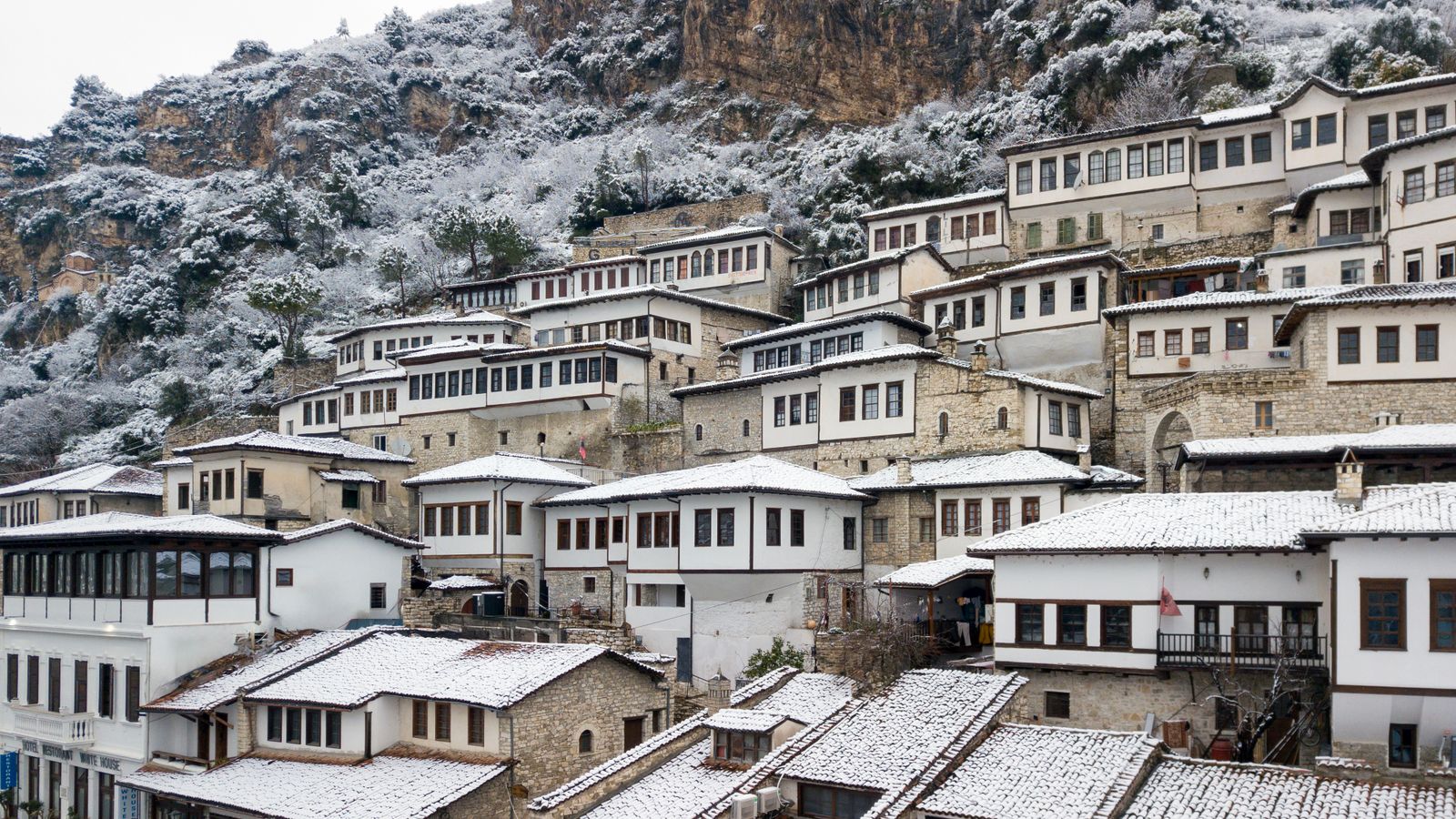
Tirana is the easiest base: cafés, museums, restaurants and nightlife carry on as normal, and a wet afternoon is easily spent indoors. Berat and Gjirokastër are at their most peaceful, with stone streets you can walk without a crowd, though some family-run guesthouses and restaurants close for a few weeks, so book ahead and confirm. Our guide to Berat helps you decide between a day trip and a night.
In the south, Butrint keeps winter hours from 1 November to 31 March, 09:00 to 17:30 with last tickets at 15:00, and on a dry day it is one of the best visits in the country. The Riviera villages are mostly shuttered, but Sarandë and Vlorë stay open as working towns, good for coastal walks and seafood without the summer queue.
Snow, and what is closed in the mountains
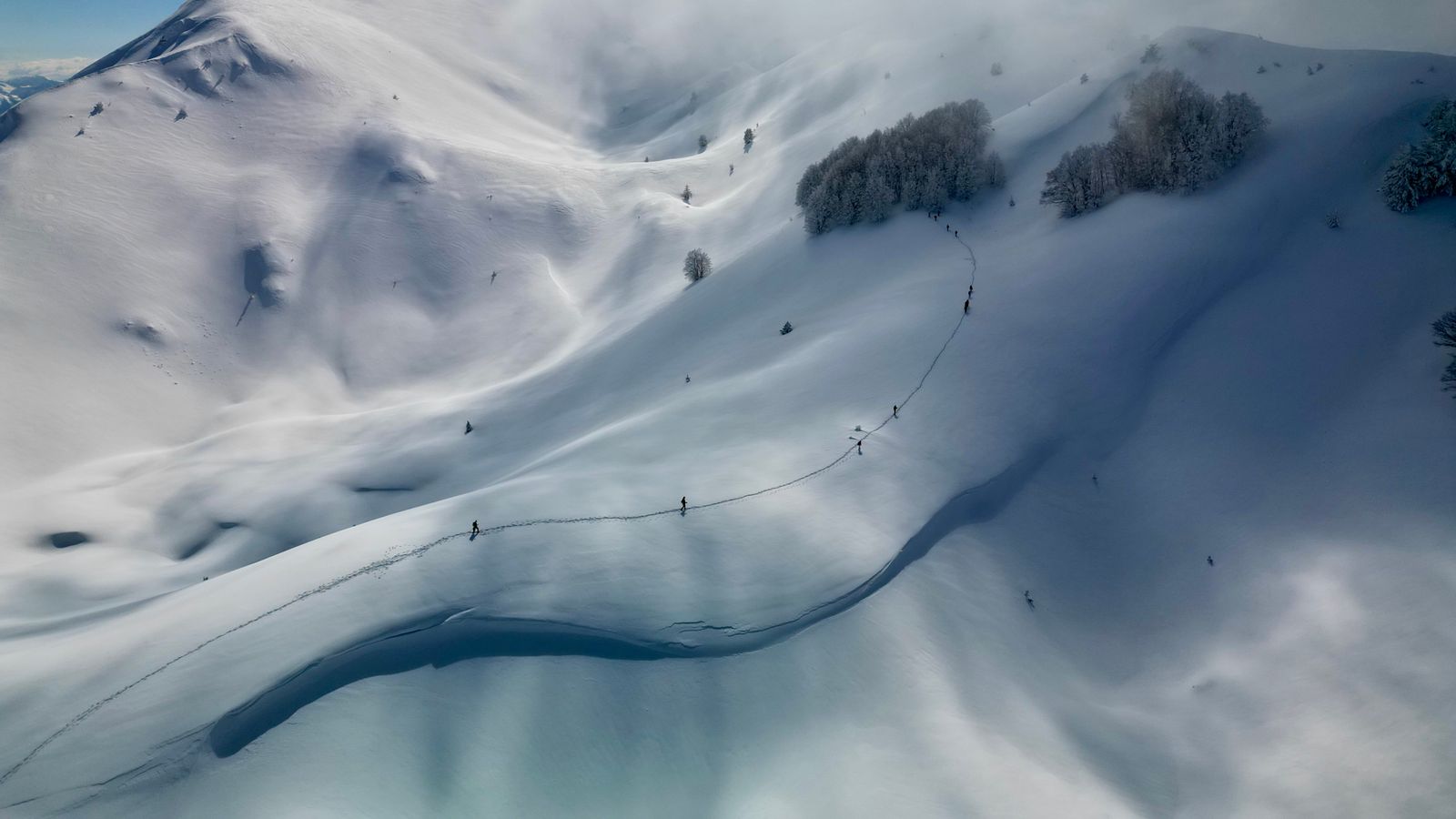
For snow, head south-east. Korçë, the painted-church village of Voskopojë and stone-built Dardhë are the easiest snowy trip in the country, and our guide to Korçë, Voskopojë and Dardhë in winter has a three-day plan. The small Bigëll slope above Dardhë opens only when there is enough snow; Snow and skiing in Albania explains what to expect. Late January and February are usually the best bets for snow cover.
The Albanian Alps are another matter. Most guesthouses in Theth and Valbonë close for the winter, the Theth–Valbona pass is a snowbound mountaineering route rather than a hike, and the Lake Koman ferry runs only from mid-April to early November. In February 2026 avalanches closed the road to Theth until 19 February. If you want the northern mountains in snow, go with a local guide and a flexible plan, or save them for late spring.
Dates to know
New Year is the big celebration of the year in Albania, and 1 and 2 January are public holidays. In 2027 the 2nd falls on a Saturday, and Albania normally moves weekend holidays to the next working day, so check closer to the time whether Monday 4 January is a day off. After that, January and February have no public holidays, which makes them the calmest weeks of the year.
February is the most popular month for a snow weekend, as families from Tirana head for Korçë and Dardhë, so book those weekends early. Just after the season, on 14 March, Albania celebrates Dita e Verës, Summer Day, a public holiday centred on Elbasan with its sweet ballokume biscuits. It is a nice reason to stretch a late-winter trip into March.
A week in January or February
Seven days in Albania in January or February
Days 1 and 2: Tirana
Museums, cafés and markets, with Dajti or a day in Krujë if the weather is clear.
Day 3: Berat
Walk the castle quarter and Mangalem in the morning light, then stay the night.
Days 4 and 5: Gjirokastër and Butrint
Explore Gjirokastër's old bazaar and castle, then visit Butrint on the driest day.
Day 6: The coast road north
Drive back via Vlorë for a seafront lunch, or swap this day for a night in Korçë if snow is forecast.
Day 7: Tirana
A slow last morning before your flight, with time in hand in case of weather.
Drive mountain stretches in daylight, keep a spare day for weather, and read Renting a car in Albania if you plan to drive yourself. Check your government's travel advice shortly before you travel.
What to pack for January and February
- A waterproof jacket and a warm layer for the lowlands
- A proper winter coat, hat and gloves for Korçë and the mountains
- Shoes with grip for wet cobbles in Berat and Gjirokastër
- Winter tyres and chains if you drive inland
- Flexible bookings, and a confirmation call to small guesthouses
- An umbrella you do not mind losing to the wind
Frequently asked questions
Yes, if you want quiet towns, low crowds and snow in the south-east, and you do not mind rain and short days. It is not the time for beaches or hiking in the Albanian Alps.
Our published tours run in the warmer months: the Essential Albania Express from April to October and the Signature Journey from May to October. In January and February we run them as private, adjusted departures with shorter driving days and a spare day for weather, and we can add Korçë when snow is forecast. Send a private trip enquiry with your dates, or read How to plan a private custom tour of Albania.