
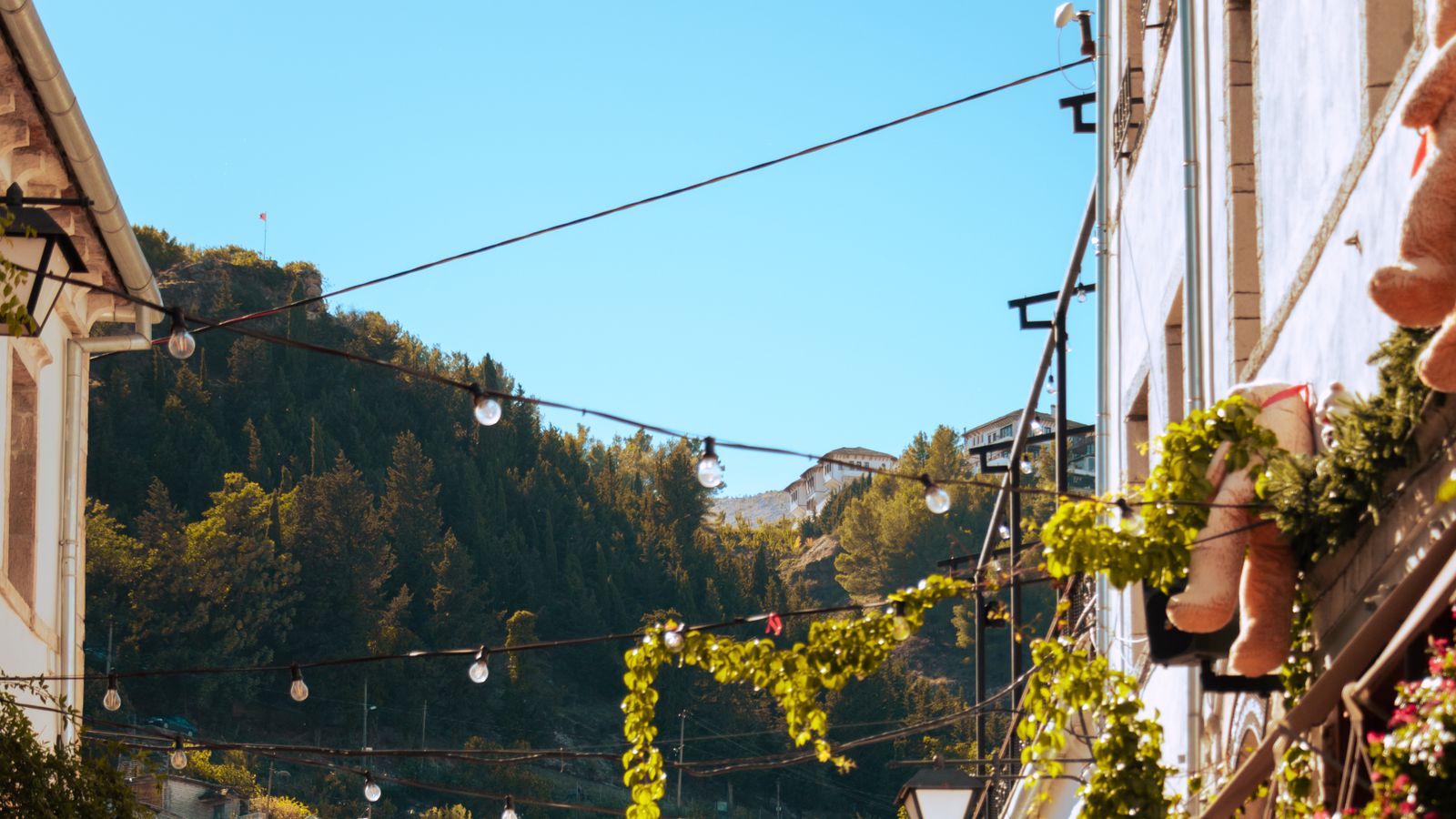
Albanian food is at its best when the weather turns. Summer menus lean on grilled fish and salads; from November the kitchens slow down, and the clay dishes, pies and long-cooked stews come back. This guide covers what to order in winter, which regions do it best and the kind of place to look for. For the season as a whole, read Albania in winter.
The winter dishes worth ordering
Start with tavë kosi, lamb baked with rice under a set layer of yoghurt and egg. Albania's official tourism site links it to Elbasan and calls it comfort food, which is exactly right. Fërgesë is the other national classic: peppers, tomato and gjizë curd cheese cooked down until thick. In Tirana the winter version often adds liver; in Gjirokastër it is made without peppers and comes out softer and creamier.
Then the pies. Byrek is the everyday one, thin sheets layered with cheese, spinach, leek or minced meat, eaten warm from a tray in the morning. Lakror, its cousin from the south east, is a two-sheet pie traditionally baked under a saç, an iron dome covered with embers. Jani me fasule, a thick bean stew often cooked with a little smoked meat or sausage, is the dish many Albanians mean when they say home cooking. Paçe, a soup made from a sheep's or calf's head or offal, sharpened with garlic and vinegar, is eaten early in the morning, and on the morning after.
| Dish | What it is | Best found |
|---|---|---|
| Tavë kosi | Lamb and rice baked under yoghurt and egg | Elbasan, Tirana, across the centre |
| Fërgesë | Peppers, tomato and curd cheese, sometimes liver | Tirana; a creamier version in Gjirokastër |
| Byrek | Layered pie with cheese, greens or meat | Everywhere, from a byrektore |
| Lakror and pispili | Saç-baked pie; cornbread with leek or greens | Korçë and the south east |
| Qifqi | Rice balls with egg and herbs, pan-fried | Gjirokastër |
| Tavë krapi | Carp baked with onion, tomato and dried plums | Shkodër |
| Flija | Layered batter pie cooked slowly under a saç | The north and Kosovo border |
| Jani me fasule | Bean stew, often with smoked meat | Home-style taverns everywhere |
| Paçe | Head or offal soup with garlic and vinegar | Early-opening paçe shops in towns |
Regional cooking: Korçë, Gjirokastër, Shkodër and the north
Korçë is the pie capital. The city sits at around 850 metres, winters are properly cold, and the cooking matches: lakror with leek and curd, pispili cornbread, bean dishes and hearty meat stews. The old bazaar area is the place to wander and look for small taverns with a saç by the door.
Gjirokastër has its own short list, and qifqi is the dish you will not find elsewhere. Look for it alongside the local fërgesë and byrek in family-run taverns around the old bazaar. Our Gjirokastër guide has the rest of the town. Shkodër's signature is tavë krapi, lake carp baked with onions, tomato, vinegar and dried plums, best eaten in the lakeside restaurants on the road towards Shirokë.
The north is where flija lives. Dozens of thin layers of batter and cream are added one at a time under a hot saç, which is why it is cooked for gatherings rather than ordered on a whim. In winter the high valleys of Theth and Valbonë are largely closed to visitors, so look for flija in lowland guesthouses and agritourism farms instead.
Where to eat traditional food in winter
In Tirana, skip the busiest strips of Blloku for this kind of food and look for family-run taverns and restaurants that cook daily dishes, plus a good byrektore for breakfast. Two places worth naming: Mullixhiu, chef Bledar Kola's restaurant near the Grand Park, cooks seasonal Albanian food from local produce and asks you to book ahead. Outside the city, Mrizi i Zanave in Fishtë, near Lezhë, is chef Altin Prenga's farm restaurant and agritourism, and a destination for its Zadrima produce and Kallmet wine. Our Tirana food guide covers the everyday side of eating in the capital. For a wider list of places to eat in the capital, browse the Tirana Directory restaurant guide.
Elsewhere, the rule is simple. The best winter food is in places that cook for locals: a tavern with a short handwritten list of the day's dishes, a byrek counter with a queue at 8 in the morning, a guesthouse where the owner's family eats the same meal you do. Check opening times directly in winter, as some smaller places shorten their hours or close for a few weeks.
Raki, boza and what to drink
Raki is the drink of welcome. Most is distilled from grapes, though mulberry and plum versions turn up too, and homemade raki is poured in small glasses before or with food. Treat it with respect; it is strong. Boza, a sweet fermented drink, is sold in traditional sweet shops, though Albanians drink it more in warm months than in winter.
For a hot drink, there is always coffee. Albanian café culture does not stop for the cold, and a slow espresso or Turkish coffee is how most people pass a grey afternoon. Read more in our guide to Albanian coffee culture. Albania also makes good wine; Kallmet, a red grape from the north, pairs well with winter stews.
Planning a winter food trip
Tirana makes an easy base, with day trips to Krujë, Durrës or Elbasan, and two or three nights in Korçë or Gjirokastër add the regional cooking. If you are there in December, combine it with Christmas and New Year in Tirana, and see things to do in Tirana for the rest of your days.
Frequently asked questions
What is the national dish of Albania?
Tavë kosi, lamb and rice baked under yoghurt and egg, is most often named. Fërgesë is the other strong contender.
What do Albanians eat in winter?
Baked clay dishes such as tavë kosi, bean stew (jani me fasule), pies like byrek and lakror, fërgesë, paçe and, in the north, flija. Meals are heavier and slower than in summer.
Where can I eat traditional food in Tirana?
Look for family-run taverns cooking daily dishes and a good byrektore for breakfast. For a modern take on Albanian produce, Mullixhiu is well known; book ahead.
Is Albanian food good for vegetarians in winter?
Yes, more than you might expect. Byrek with cheese or greens, lakror, pispili, bean stew without meat (ask), fërgesë without liver and qifqi are all common.
What is flija?
A northern Albanian dish of many thin batter layers brushed with cream, cooked one layer at a time under a saç. It takes hours, so it is usually made for gatherings or ordered ahead.
Is boza a winter drink in Albania?
Not really. Boza is sold all year in traditional sweet shops, but in Albania it is mostly drunk cold in warm weather.
Our published tours run in the warmer months, so a winter trip is a private journey, adjusted for shorter days and built around the regions and tables you most want. Send us a private trip enquiry with your dates.